It's Mysterious indeed. How can a bee keeper who had 2900 colonies of bees suddenly lose 1900 colonies without warning? It's called called Colony Collapse Disorder and it's running ramped while experts are trying to find the reason behind it! Bees that have been studied were found to have foreign fungi, bacteria and other organisms that are weakening the bees immune system. The problem has spread over 24 states and can become or already is a very serious problem. For instance, in Florida, the sate's 45 million dollar apple crop is 90 percent dependent on the bees pollination! The problem is so bad that I heard on the radio today that congress will be looking at the problem. Hopefully this can be resolved sooner than later.
Some resources to investigate:
http://www.post-gazette.com/pg/07045/761799-114.stm
http://environment.newscientist.com/channel/earth/mg19325964.500-where-have-all-the-bees-gone.html
Also Google Colony Collapse Disorder.
Thursday, March 29, 2007


Wednesday, March 28, 2007
Bird droppings
I got a question as to the best product to use to clean up bird droppings from pigeons that were roosting for years in an attic type crawl area of a home. My answer was quick. No product is good for you to use. Notice I used the word, "you". This is a case where you call a professional and have them clean this area up. If you were to go up there with a shop vac or broom and start sweeping up those droppings and the dry droppings became airborne you would have the potential to catch some very nasty and potentially fatal diseases. Bird droppings and bat droppings are nothing to fool around with by people who don't know what they are doing. While I'm on the topic, neither are mouse droppings. If you ever come across a mass amount of droppings in an attic or crawl space or anywhere, you need to call a pro. They have the proper equipment and chemicals and knowledge to do the job safely and efficiently. That's why bird work is such a specialty business.
Ants
Ants and their control
Tis the season when it comes to ants and their unwanted advances into the human world. So what's their deal and how to we get rid of them? Well spring time is when these little buggers start to develop their colony. The ants you see now are out foraging for protein to feed the little ones and keep the egg factory running smoothly. As spring continues on and the warm days give into the hot days of summer, the ants appetite turns from proteins to sweets. Ants are busy beavers and the sugar gives them a boost just as it does to humans. You can see an interesting development here. Ants are picky eaters at different times of the year. SO if you have ants crawling on your stove and you go to Home Depot and put out any old ant trap you find then chances are you won't get the control you want. Read the bait label of the baits you buy and make sure it is for sweet and protein feeding ants. There is a fantastic product out there called Advance Dual Choice that takes care of both and works very well. Bait placements and choice factor into ant control far more than you think. I advise to mix it up with dry baits and gel baits and on the outside use bait granules. Place the baits where the ants are hanging out. If they are around you sink them place the gel bait behind the splash boards if possible. Never put bait where animals or children can get to it. How about sprays you ask? Just a quick fix. Baiting it's the way to go. Don't be afraid to use too much bait and place them in the trails the ants are traveling because they leave pheromone trails and other ants will surely be following right behind and it is then they will find their pot of gold and take the bait.
Sunday, March 25, 2007
Termite renewal!
Is it worth it to renew my termite contract?
I was sent this question and have to answer with an emphatic YES! Termite control is not an exact science, although the technology and chemistry has improved a great deal over the years with the introduction of non-repellent chemicals and baits, there is still the possibility of the termites finding a way back to your home. If the liquid being pumped in the ground hits a rock and splits leaving a small, untreated area, then you have a highway for the termites to return. This is no fault of the pest control company, it's just the nature of the treatment. So let's say the treatment kills 98 percent of the termite population and the other 2 percent get through, then you can have a problem. Now let's fast forward a few years later and you get a swarm, if you are not covered by your termite renewal then you would have to pay that whole thousand or so dollars again to have the home treated. If you paid the yearly renewal fee then it would cost you nothing but the fee. Now be warmed that if you get a swarm within the year then the partial treatment of the area should be free and covered under the one year warranty that most companies give.
Saturday, March 24, 2007
Bees
Yikes! I saw my first bee of the season fly by me yesterday and it got me thinking of my days long ago when I'd be battling the bees and wasps in my bee suit and saving the day! Now I just swat at them a run if they get mad. With the warm weather closing in on us, we will no doubt be facing the stinging insects that are impossible to hide from. Future posts will include specific treatments from specific bees and wasps such as carpenter bees and hornets and such. Right now I will point out that you might start to see bees in your home. Don't be alarmed right away. These can very possibly be bees that have come in last year and "over wintered" or vacationed in your home until spring. The ones you see now actually just want one thing, to escape and get back outside. Open the door and let them go. Now if you happen to come across bees entering a hole in the side of your home for instance or flying into a crack of your home on the outside. DO NOT PLUG IT UP AT NIGHT! Don't think by plugging the hole they will die of starvation. What most likely will happen is they find a way out the other way...which is right into your house. Now you have a bunch of angry bees in you house, not happy, well rested "vacationing" bees. This is very important. If you are afraid to treat the bees yourself then call a pest control professional.
Friday, March 23, 2007
Ant Control
If you've had problems over the years with ants getting into your home or if you simply want to avoid the problem then you should start your offensive now. Don't wait until further into the spring or summer when the ants are at their strongest numbers. Treating for ants outside should be your plan of attack! Most home improvement stores or even your local hardware stores should have granule products that you can place out for ants in the form of bait or insecticide. You want to place a band of about a foot or two around your entire home perimeter according to the label. Many do it yourself online stores carry different kinds of baits or granules you can buy. Remember! If you have pets or young children you must use caution. Maybe buy bait stations to put the bait in an forget about the granule insecticide. So long as you start to do something now you should have at least a much less battle if they do get into the home.
Thursday, March 22, 2007
Pets and Bedbugs
Can bedbugs live or be carried on pets?
This question was left in a comment in a post about bedbugs left by Jessica. The answer is that bedbugs will bit and feed on pets depending on the infestation. They bite any warm blooded animal. As for being carried on a pet I would have to say it's a possibility. I wouldn't put it in the same category as fleas but it is possible for a dog to have bedbugs on them. Bedbugs are more the type to eat and run, so they wouldn't be hanging out too long after a blood meal to really be caught on the dog. As I said though, anything is possible.
Mealy Worms
I have little worms crawling on my ceiling!
Chances are you have been infested with a stored product pest. Indian Meal Moths and what people term as "mealy worms" can come from a variety of places, so it is important to find the source. So where do you look? The main places to look would be any dry goods like cereal, pasts, oat meal, flour, baking sodas, rice, spices, dry milk, dog and cat foods and bird seed to name a few. You have to look in these items and chances are you will find live worms or moths or what look to be "casings". If you see this the item must be thrown away. Don't stop at one item if it is infested. Continue to inspect all dry goods to be sure and throw away any suspected products. The ones in your home can be taken care of with a vacuum cleaner and once the infested item is gone so will your problems. Happy hunting!
Wednesday, March 21, 2007
Spring Time is here!
Happy Spring everyone...today is the first day of spring and we can now officially say we're heading into the "season". As we know from this very moment until about June we will be in the termite swarm season where any hot sunny day, especially after a rain, can trigger a termite swarm which is you best indication that you have them. With spring and summer also comes ants and bees, crickets, and roaches and all the fun bugs that creep out in the warm weather. As the season progresses I will be writing articles on specific bugs and their control as well as other news pieces that might come our way. As always...if you have any questions relating to bugs or their control you can e-mail me at billthebugman@hotmail.com and I'd be happy to post your question here in our blog.
Monday, March 19, 2007
Funigation and Bed Bugs
Will Fumigation Eliminate Bed Bugs?
The short answer here again is yes, but fumigation is not always a realistic option for many people. It is very expensive, most times it can only be done to a single home or an entire building, and did I mention it was expensive. The idea behind fumigation is that a poisonous gas penetrated every pore of the structure which is the reason a fumigation would work so well in bedbug control. Some people will have their belongings fumigated, say in the back of a truck, if they are moving and want to be sure that they are not taking any bedbugs with them. This approach might not be as bad in terms of expense but I am sure it is not cheap. Then the problem is finding a company that specializes in fumigation's to do it. It is a very specialized form of pest control.
Bombing for Bed Bugs
Will setting off foggers eliminated bedbugs?
The short answer is no. Fogging will most likely push the bedbugs deeper into the walls or spread them to other parts of the home where they are not wanted. Containment is the word of the day in dealing with bed bugs. The fog also wont penetrate deep enough into the areas where these bugs hide and breed. A thorough crack and crevice treatment with subsequent follow up visits is the only way to gain a solid control of bedbugs or a complete fumigation.
Sunday, March 18, 2007
Termite inspections for real estate sale.
WDIR=Wood Destroying Insect Report
I recently had a question in regards to a house that was being sold and the termite inspector failed the property because of old damage and shelter or "mud tubes" on some wood joists. Now there was no activity to be seen and no live termites and the house was treated before. SO why did it fail?
In many cases a house will fail if there is shelter tubes because that is an indication that the termites may have returned after the treatment. After a treatment is done the termite technician is supposed to scrape down any visible shelter tubes. This helps to monitor the recurrence of the termite problems when the follow up or yearly inspection is done. So that is most likely why the inspector failed the property.
Wednesday, March 14, 2007
Termites are here
The word on the street here in the Northeast is that the termite swarms are here. This is the time between the months of March and June when the termites will swarm most easily and chances are you may come home to find a bunch of dead what look to be flying ants covering your floor. These are most likely swarming termites. So what do you do? Don't panic...the flying swarms are harmless other than being annoying. It is an indication that you have termites and they will need to be treated. What you should do is save a few of the swarming termites and save them to show the inspector or pest control guy who comes out so he or she can verify that they are in fact swarming termites and not swarming ants. If you want you can go online and check the differences your self to be on the safe side. Next thing to do is get some prices from several pest control companies. Go with a few local companies and then call some large national ones. Check the better business bureau to see that the company has no real bad complaints against them and then do the word of mouth thing. Ask your neighbors and friends who they used and why they decided to hire them. Feel comfortable with your decision because the job will be expensive and you will want to get a good job done by the company.
Wednesday, March 07, 2007
Do It Yourself Pest Control
DIY Exterminating
If you decide not to hire a professional pest control company and do it yourself then where is the best place to get the tools you need to do the work? There are several "do it yourself" sites out there in cyber space that have a ton of information and the ability to purchase the products directly over the internet. Simply google the topic "do it yourself pest control" and you get a ton of hits. Other places to go would be the brick and mortar stores like Home Depot and Lowes. They both have a very good pest control section. In a pinch your local hardware store (if there are any left out there) will have some products for basic pest control. If you decide to tackle the project yourself my advice is to do your homework, read the label of the products you are using, and be careful.
Thursday, March 01, 2007
Hire a Pro or Do It Yourself?
Hiring a Pro versus doing it yourself.
I get the question sometimes about my thoughts on do it yourself pest control as opposed to simply hiring a professional. My answer is simple. If you enjoy doing it yourself and you think you have the resources and knowledge to tackle a particular pest problem then go for it. There are some problems I'd leave to the experts though and they would be termites and bees. Termite control can be very tricky and although there are DIY kits you can get from maybe Home Depot or Lowes I wouldn't recommend them. You are dealing with probably your biggest investment and termite work is involved and not as straight forward as killing a roach. Also you will be given a warranty in most cases and sometimes the pest control company will even warranty any new damage that might occur from termites. I'd bite the bullet and pay for a Pro in this case...it's true that termite jobs are expensive, but they are worth the money if done by a pro.
Next topic is bees. Unless you are just spraying down a little paper wasp nest then I'd leave it alone for the pest control guy to do. Personally I'd even leave the little paper wasp nest alone. First of all bees and wasps and hornets can become very aggressive and there is strength in numbers and in most cases they will have you out numbered! There is usually always bees or wasps "watching" the nest or they might be out foraging for food and upon return you can get knocked on your butt pretty quickly. While on the subject of bees it is important to say here to never...ever...seal a hole that bees are going into, especially if they are entering an outside wall void of your home. They will find a way out and it is usually through the inside of your house. So bees are a definite "call the Pro" situation. I guess in parts of the country other than the Northeast you have to be careful of fire ants and scorpions and snakes...all of the above...call a pro.
Friday, February 23, 2007
Termite Baiting vs. Liquid Termite Treatment
The debate goes on about the effectiveness of termite baits versus getting your house treated with liquid termiticide. Let's look at both techniques. In baiting the termite company would place termite bait stations around the outside of your home with an attractant in them every so many feet. When one of those attractants showed signs of termite activity then the attractant would be replaced with active bait and thus destroy the colony. Liquid treatments consist of drilling into the ground both outside and inside. Sometimes the treatment company will have to pull back rugs to get to the slab underneath, sometimes they will need to drill into cinder block walls also. The drilling will be every foot inside and out and where there is no cement slab then they will rod into or trench the soil.
Liquid termiticides are very effective these days...especially the non-repellent chemicals such as Termidor and Premise. You know that the liquid is in the ground and that the termites will eventually come in contact with it and die. The drawbacks are lots of moving of furniture...drilling into your slabs...it's very invasive. The baits can be just as effective if they are placed properly and you get activity. Some companies will use a combination of the two.
It boils down to you the customer. Do you want hammer drills and hoses being drug through your home or do you like the more reserved approach. Either one in time can do the job in most cases.
Liquid termiticides are very effective these days...especially the non-repellent chemicals such as Termidor and Premise. You know that the liquid is in the ground and that the termites will eventually come in contact with it and die. The drawbacks are lots of moving of furniture...drilling into your slabs...it's very invasive. The baits can be just as effective if they are placed properly and you get activity. Some companies will use a combination of the two.
It boils down to you the customer. Do you want hammer drills and hoses being drug through your home or do you like the more reserved approach. Either one in time can do the job in most cases.
Wednesday, February 21, 2007
Termites

TERMITES
With March right around the corner and spring only 29 days away it's time to start thinking about termites and termite swarms. This time of year, in the months of March, April, and May, is known as the termite season. It is during this time of year that the conditions are perfect for swarming and often times the termites do just that. On a warm day after a good rain, with the sun beating down, is when you can be pretty sure to come home to a thousand or so flying insects that look like flying ants.
People are often shocked to come home to these swarms covering entire living room floors and furniture or piled up on the window sill. Sometimes all people will find are the wings of these insects scattered on the kitchen floor. Whatever the case may be it is advised that you save some of them and show a pest control professional.
Some characteristics to look for is if the antennae are straight and the body is not pinched in the center then it is most likely a termite swarm...an ant swarm will have elbowed antennae and a pinched body.
Friday, February 16, 2007
Squirrel Evictor
Squirrel Evictor
Getting rid of squirrels in the attic can be frustrating and an overall pain in the butt! There are several ways of dealing with a squirrel in the attic; trapping and sealing up the hole is one of them and a product called the squirrel evictor is another. It is a strobe light device that you hang in your attic and the flashing lights agitate the squirrel's sensitive eyes. One of their MB10K models can cover a 900 sq foot area. The web site to check out the product is www.squirrelevictor.com
Pest Control Information
Pest Control Info
This blog is about pest control information in regards to what to look for if you think you have a pest infestation and how to go about dealing with that infestation. In some cases it is recommended that you seek professional help in dealing with a particular pest or wildlife control problem and in other cases I offer insight into doing the treatment yourself. Hopefully you'll find this blog helpful. I hope you find the information you need.
Monday, February 05, 2007
Mattress covers and Bed Bugs
Using a mattress cover in the battle of bed bugs is gaining popularity on both a defensive and offensive front. If you are unfortunately already infested with these bad boys then you can avoid having to throw away your whole bed set and/or drenching your bed with chemicals by wrapping your bed and box spring in a hypo-allergenic mattress cover. This will keep any live ones from escaping and prevent any new ones from infesting the millions of cracks, crevices, tufts, nooks and crannies that a mattress and box spring have to offer these bugs. The trapped ones will eventually die from hunger and you've saved yourself a grand by not throwing away your bed.
On a defensive front if you travel and you happen to bring some of these buggers home with you then this will keep them out of the posts that they love the best which is your mattress and box spring.
Mattress covers are just a tool in the vast arsenal it takes to get bed bugs under control and eventually eliminated, but it's definitely a tool worth investigating.
Is your mattress outdated? Consider buying a memory foam mattress. Offering great support for the back, memory foam mattresses are the new choice in bedding. For more information about memory foam beds, sign online.
On a defensive front if you travel and you happen to bring some of these buggers home with you then this will keep them out of the posts that they love the best which is your mattress and box spring.
Mattress covers are just a tool in the vast arsenal it takes to get bed bugs under control and eventually eliminated, but it's definitely a tool worth investigating.
Is your mattress outdated? Consider buying a memory foam mattress. Offering great support for the back, memory foam mattresses are the new choice in bedding. For more information about memory foam beds, sign online.
Wednesday, January 24, 2007
Cryonite
Cryonite for Bed Bug Control
There is an interesting process and product that is being used in the control of bedbugs call Cyronite. It's an environmentally friendly way of controlling insects via freezing them. It's a carbon dioxide snow that will kill the adults, larva, and eggs. This process can be used to kill roaches and other insects as well but it is being explored by some of the larger companies like Terminix for bed bug control especially in hotel settings. Sorry...this is not a do it yourself product, but it is encouraging to see that there is momentum in the fight against bedbugs! More information can be found at
Friday, January 19, 2007
In From The Cold
Finally it has arrived. Winter. Especially here on the east coast. So what does that mean for all the mice and rats that have been living large in the warm weather that has been deceiving us for all this time? It means vacation is over and they will be moving back home. Mice and rats hate the cold just as much as we do. The snow and cold weather drive rodents into the shelter of homes and business faster than lighting for the simple reason of survival. This is why it is so important to weather proof and seal any potential openings that would invite these mice and rats in. A hole the size of a dime in the corner of a door is enough space for heat to exit and for mice to enter. As that little guy is scurrying along the edge of your front porch he feels the warm air escaping and make a B-line for the hole. Welcome home rodent family...welcome home.
Wednesday, January 03, 2007
PROVOKE MOUSE ATTRACTANT

Bell lab's new product provoke is the hottest thing since sliced bread when it comes to catching mice! It was formulated to be the most attractive food source for mice and the reports are it's working like a charm. You don't have to be afraid to bait your snap traps with provoke in sensitive areas because it is hyper-allergenic. Peanut butter allergies? Forget about it! Provoke comes in a easy to use squeeze bottle, just put a dab of it on your snap traps, gluetraps or tin cats!
Monday, October 23, 2006
Baiting vs. Trapping for mice
What is better: Mouse bait or trapping?
In most cases I have to side with trapping because of this reason. If you bait for mice and you have a few mice running around your house then you will run into a problem as they start to ingest the poison. As they die they will begin to decay and stink. If you only have one mouse then the smell will go away in a few days. If you have several mice then the smell will take longer and with several mice the smell will be that much stronger.
Another problem with baiting is you have the potential of trading in a mouse problem for a fly problem. Decaying mice will breed flies, especially in the warmer months.
With trapping these problems are avoided in that you see what is caught and you physically throw it away. There is no chance of the mice dying in the walls or ceilings, they are only caught where you set the traps. So the chance for odor and fly problems are eliminated.
If the problem in very severe then baiting may have to be incorporated into your plan, just be aware of the possible problems you may experience.
Sunday, October 22, 2006
Mice and snap traps.
Every time I go to check the snap traps I've set to catch the mice I notice that they ate the peanut butter off the trigger but didn't get caught. Why is this?
Mice are really resourceful creatures and smarter than a lot of people think. I've seen videos in rodent control seminars where a mouse actually built a bridge over a glue trap out of paper and other debris over time. Some tips in trapping with snap traps would be to only use a smear of peanut butter if that is your bait of choice. Make the mouse work at getting a taste. In almost every account I would go into where the customer tried to catch the mouse first, I would find a snap trap with a glob of peanut butter. Undoubtedly the mouse will feed off of this glob until it is gone. Just a dab will do ya. Next thing is to try to switch up on your baits. Chocolate that can be formed around the trigger so the mouse has to tug is a good way. Meat and cheese that can be attached to the trigger is good also. Cotton or dental floss tied to the trigger so the mouse has to pull is great because they also hunt for nesting material during their travels. Remember, laying the cheese of the chocolate on top of the trigger does nothing because the mouse will be able to eat around it. Try experimenting with how sensitive the trap setting is also. Try to make it as sensitive as you can. Some people set it all the way so their fingers don't get snapped. The more sensitive the better. Happy hunting!
Mice are really resourceful creatures and smarter than a lot of people think. I've seen videos in rodent control seminars where a mouse actually built a bridge over a glue trap out of paper and other debris over time. Some tips in trapping with snap traps would be to only use a smear of peanut butter if that is your bait of choice. Make the mouse work at getting a taste. In almost every account I would go into where the customer tried to catch the mouse first, I would find a snap trap with a glob of peanut butter. Undoubtedly the mouse will feed off of this glob until it is gone. Just a dab will do ya. Next thing is to try to switch up on your baits. Chocolate that can be formed around the trigger so the mouse has to tug is a good way. Meat and cheese that can be attached to the trigger is good also. Cotton or dental floss tied to the trigger so the mouse has to pull is great because they also hunt for nesting material during their travels. Remember, laying the cheese of the chocolate on top of the trigger does nothing because the mouse will be able to eat around it. Try experimenting with how sensitive the trap setting is also. Try to make it as sensitive as you can. Some people set it all the way so their fingers don't get snapped. The more sensitive the better. Happy hunting!
Wednesday, October 18, 2006
Fogging for Roaches
Is Fogging for Roaches OK?
The short answer is no. Using foggers has it's place in a situation where you need quick knock down, for instance, if you went into an apartment that was so infested the walls were crawling and you needed a quick kill so you could clean it out for the carpet guys! If you want complete elimination of roaches then fogging is not your answer. Foggers will kill exposed roaches. It will not kill roaches in egg casings and it will not kill roaches that are stuffed behind cabinets and in walls. Often times you make the problem worse with fogging because you have the potential of pushing the roaches further into the walls. To do a complete job properly you will need to incorporate baits, insect growth regulators and traps. Most exterminators will use this integrated approach, if you are looking to do it yourself then I'd suggest buying a good gel bait and some roach bait stations. Treating all areas very thoroughly.
Tuesday, October 17, 2006
Bed bug Question.
Do I need to treat my entire house if I find bedbugs in my bedroom?
The short answer to that question is yes. Bedbugs will not only live on your mattress and boxspring, but will also migrate to other areas of the home. That is why treatments call for treating every nook and cranny. They will also travel from room to room via wires, pipes, or just by the fact that they are so small they can fit under baseboards and go right to the next room the same way. The proper treatment of a house would be the bedroom and all rooms on all sides of that bedroom and above and below.
This is also true for apartment units. The entire unit as well as the units on all sides and the units above and below need to be treated. Not doing so will lead to failure in the treatment and a resurgence of these bugs down the road. Bedbugs treatments are expensive and involved, no doubt, but done correctly control can be accomplished with a few thorough visits.
If you are looking for the best information about bedding, simply sign online. From information on duvet covers to the store locations that sell satin sheets, all of your information is available online! Finding the right bedding can be expensive and a hassle. By doing your research online it doesn't have to be!
Monday, October 16, 2006
Mouse Proofing Tips
The cold weather has arrived and with it comes the rodents looking for a warm place to wait out the winter. One way to avoid becoming pray to these furry squatters is to mouse proof your home. First thing to do is inspect from the inside out. Simply stand in your dark garage and if you see light coming in from under the door or a crack in the corner then a mouse can enter. Stand in your dark basement and any light coming in from under doors or windows is a sure sign a mouse can also enter. Now walk around the outside and look for wires and pipes that are entering. All spaces around these entry points need to be sealed. If you have a home over a crawl space then the pipes for the utilities that might come up from the crawl space should be sealed where the floor meets. Using a product called Stuf-fit or Stuff It will help to seal these areas. Stuf-fit is a cooper mesh that is able to be stuffed into holes or around entry points to keep rodents out. For your garage door or entry doorways you may need to replace or install a good piece of weather stripping or a door sweep. These can be gotten at your local hardware store or a do-it-yourself pest control store. The Stuf-fit product can also be bought at one of these retail establishments. Some other tools to arm yourself with would be caulk for the space around the wires that seen sealing and some expandable foam for any area that needs a large section filled. Mice are opportunistic and even though it is filled with foam that they can easily gnaw though, chances are they will look for an easier entry route.
Friday, October 06, 2006
SQUIRREL IN MY ATTIC!
There is a squirrel in my attic!
I received a question about how to get rid of a squirrel in the attic. This is a common and unwanted problem that homeowners have to deal with unfortunately. Let me set the stage for you. You're lying in bed and hear the scampering of little feet above your ceiling and scratching sounds and you can't fall asleep. What do you do?
You have a few options open to you. You can go to your local pest control shop or your local Home Depot store and buy a live trap or a humane trap. This will only work if you have an open attic without a floor where you will be able to put this trap out in the area of activity. Bait the trap with peanut butter or nuts and carefully, let me say that again, carefully place the trap in the area you hear activity or the closest to it. Be careful not to fall through the ceiling and be careful not to get attacked by the squirrel!
Your other option would be to look and see where the squirrel is coming into your house from. Is there a piece of flashing that has come away fro the house or is there is hole that he is getting into? Then you can go up there and put a sticky repellent that most pest control stores will sell you called "for the squirrels" or even "for the birds" around the hole entrance. This sticky repellent will agitate the squirrel as he goes in and out for food and he will not return. You may have to re-apply this a few times. You also must take care not to stain your siding. It can be messy. After the noise has stopped at night you must seal the hole to prevent him from returning.
I wouldn't recommend just sealing the hole without first knowing for sure that he is out because he may panic and find his way to an area of the house you don't want him. Also there is the chance he will die up there and you will eb dealing with an odor and a possible fly problem. Trapping and/or exclusion is your best bet.
Some other tips to avoid this problem would be to prune back any tree branches that fall on your roof and utility companies have squirrel guards that they put around wires that go into houses or near the roof to prevent squirrels from climbing the wire. Also don't feed the cute squirrels. They will never go away!
Monday, October 02, 2006
Can Rats Come Up Through My Toilet?
RATS AND TOILETS
Rats are swimmers and good swimmers at that! Rats live in the sewer. Rats can most definitely make their way up your soil pipe and into your toilet if they so choose. There has been many a frantic call that would come into my office where the client was horrified to find a rat in their toilet bowl! This can be prevented by installing a toilet flap excluder.
Wednesday, September 20, 2006
How to "do it yourself" bedbug elimination!
Bed Bug Elimination
It's a clear fact that our generation is being revisited by a plague that pestered a generation long ago. That plague is bed bugs. The almost microscope bug that bleeds us dry and leaves it's presences know by ugly bite marks and stained bedsheets!
The question has been asked about how to get rid of bedbugs ourselves without hiring a pest control company who will charge us an arm and a leg as the bedbugs eat them both!
Think of bedbug control as a weekend project. It will by no means be a fast spray behind the bed and you're free and clear. Bedbugs multiply pretty quickly and if they are not treated quickly they can take a strong hold which makes them a little difficult to control.
Steps to take are as follow:
Do as much contact killing as you can with a product labeled for bedbugs like Eaton's Bedbug Killer or Bedlam or Sterifab.
Turn the mattress and boxspring on it's side and spray all areas where there is activity. Then spray the cracks and crevices. Try to get a hold of a product called Suspend SC or CY-KICK CS as it is labeled for bedbugs. Mix it as the label directs you to in a gallon sprayer. Treat the entire perimeter of all the rooms and treat on the underneath side of furniture as well. Pull out drawers and wash and dry clean all cloths, then treat the inside and backside of all drawers. Be careful not to stain areas with the spray, you may need to test spray certain areas first as not to stain them or get a hold of a good crack and crevices can spray for these areas. Treat in closets, in all cracks and crevices, and treat behind picture frames, again using lots of caution not to harm or destroy the thing you are spraying. With a good insect dust labeled for bedbugs you will need to take the covers of the light switches and outlets off and treat in these areas. You may also have to pull the carpet back away from the wall and treat the area between the tackboard and the wall. Do this procedure for all the rooms in the house...not just the bedroom as bedbugs travel and hide in all rooms.
As you can see this process is very involved and many times does require the help of a professional. These folks have all the labeled chemicals that will work against these blood sucking bastards!
The most important thing in bedbug control is being thorough and treating every inch of the room. Because these bugs hide like pros you need to treat alarm clocks, behind pictures, radios, televisions, hollowed curtain rods, behind baseboards, molding, wallpaper that is peeling back, doorknobs, hangers, ceiling fans. The list goes on and on. Prepare yourself for a long battle that in the end you will most definitely win!
Sunday, September 17, 2006
Biggest batch of box elder bugs
Biggest batch of box elder bugs since 1988
ST. PAUL (AP) - Bug experts say recent weather conditions will give the Twin Cities area its biggest hatch of box elder bugs since 1988.
"It appears that conditions were just right," said entomologist Jeffrey Hahn. "We had the warm spring and then the dry summer - conditions that are right for a big hatch."
Experts say if one black-and-orange bug is found, chances are thousands more are nearby. They often cover the bark on female box elder trees and sometimes blanket other maples.
The bugs are more of a nuisance than anything, and they don't bite people.
Hahn said there are ways to keep them from invading a house.
"Caulk and seal," Hahn said. "After that, a judicious use of pesticides" is the best way to fight back. Many homeowners also spray box elders with a mixture of laundry soap or dish detergent and water.
This year's large hatch comes as Minneota celebrates its 125th anniversary and its annual Boxelder Bug Days - a festival famous for its box elder bug races.
Bill Holm, a Minneota resident and literature and writing professor at Southwest Minnesota State University at Marshall, wrote about the bugs in "Boxelder Bug Variations," a 1985 collection of poems, prose and music.
Learn to live with them, Holm suggested. "They don't do any real damage."
ST. PAUL (AP) - Bug experts say recent weather conditions will give the Twin Cities area its biggest hatch of box elder bugs since 1988.
"It appears that conditions were just right," said entomologist Jeffrey Hahn. "We had the warm spring and then the dry summer - conditions that are right for a big hatch."
Experts say if one black-and-orange bug is found, chances are thousands more are nearby. They often cover the bark on female box elder trees and sometimes blanket other maples.
The bugs are more of a nuisance than anything, and they don't bite people.
Hahn said there are ways to keep them from invading a house.
"Caulk and seal," Hahn said. "After that, a judicious use of pesticides" is the best way to fight back. Many homeowners also spray box elders with a mixture of laundry soap or dish detergent and water.
This year's large hatch comes as Minneota celebrates its 125th anniversary and its annual Boxelder Bug Days - a festival famous for its box elder bug races.
Bill Holm, a Minneota resident and literature and writing professor at Southwest Minnesota State University at Marshall, wrote about the bugs in "Boxelder Bug Variations," a 1985 collection of poems, prose and music.
Learn to live with them, Holm suggested. "They don't do any real damage."
Saturday, September 16, 2006
Warm fall and winter weather brings bloxelder bugs
It's been crisp and cool and feelin' like fall when suddenly Indian Summer hits and the crisp air turns spring like again. The temperatures go up to the high 70's and even 80's and with the warm weather comes the dreaded boxelder bugs. Boxelder bugs or Halloween bugs as people call them because of their orange and black bodies over winter in the wall voids and cracks and crevices of buildings. When warm weather hits they start to become active and become a bother in office buildings, homes , and schools. People complain of seeing them in the lights of drop ceiling covers and flying around the office. They tend to cluster on the sunny side of buildings becoming a bother to people trying to enter the buildings. Some ways to help control them inside is to use a vacuum cleaner with a hose and vacuum them as you see them. Outside people spray them down with soapy water or hot water. Truth is..The boxelder bug is one of the hardest bugs to get rid of in my opinion and anyone who has experienced a problem with them would agree with me I'm sure.
Peppermint a pleasure for people but a turnoff for mice
Peppermint a pleasure for people but a turnoff for mice
by ARA Content
The scurrying of tiny mice feet on a kitchen floor or the not-so-subtle droppings in the corner of the living room are enough to make even the most grounded homeowners shudder and launch into a wild-goose chase to find the mice that have invaded their home.
As the weather turns cooler, mice begin to seek cozier surroundings — including homes.
Advertisement
Even seemingly well-sealed homes are susceptible to mice during the fall and winter months. Mice are excellent swimmers and climbers. They are able to jump over a foot off the floor and can squeeze through openings as small as 1/4 of an inch — roughly the diameter of a pencil.
To rid the house of mice, homeowners often find themselves having to trap and poison the little critters. But poison baits can be harmful to children and pets.
Fortunately there is a natural alternative to these rodenticides. Natural peppermint essential oil (also known as “oil of peppermint”) offers a safe, effective and humane way to discourage these damaging and potentially disease-carrying rodents from entering homes.
“Although the scent is pleasing to humans, mice are repelled by the scent of natural peppermint essential oil,” said Mindy Seiffert, aromatherapy category manager for Aura Cacia. “The oil drives mice away without the danger of poisoning pets or young children.”
To discourage the animals from entering, Seiffert recommends putting a few drops of peppermint essential oil on cotton balls and placing them around the house in areas where mice might enter the home or hide. Homeowners can also sprinkle the oil directly on floors and walls and items, or make a scented spray with two teaspoons of oil per cup of water.
by ARA Content
The scurrying of tiny mice feet on a kitchen floor or the not-so-subtle droppings in the corner of the living room are enough to make even the most grounded homeowners shudder and launch into a wild-goose chase to find the mice that have invaded their home.
As the weather turns cooler, mice begin to seek cozier surroundings — including homes.
Advertisement
Even seemingly well-sealed homes are susceptible to mice during the fall and winter months. Mice are excellent swimmers and climbers. They are able to jump over a foot off the floor and can squeeze through openings as small as 1/4 of an inch — roughly the diameter of a pencil.
To rid the house of mice, homeowners often find themselves having to trap and poison the little critters. But poison baits can be harmful to children and pets.
Fortunately there is a natural alternative to these rodenticides. Natural peppermint essential oil (also known as “oil of peppermint”) offers a safe, effective and humane way to discourage these damaging and potentially disease-carrying rodents from entering homes.
“Although the scent is pleasing to humans, mice are repelled by the scent of natural peppermint essential oil,” said Mindy Seiffert, aromatherapy category manager for Aura Cacia. “The oil drives mice away without the danger of poisoning pets or young children.”
To discourage the animals from entering, Seiffert recommends putting a few drops of peppermint essential oil on cotton balls and placing them around the house in areas where mice might enter the home or hide. Homeowners can also sprinkle the oil directly on floors and walls and items, or make a scented spray with two teaspoons of oil per cup of water.
Thursday, September 14, 2006
Bed Bug Question
Posted on Sun, Sep. 10, 2006email thisprint this
RESURGENCE OF PESTS
Travelers can bring bed bugs to cleanest homes and hotels• Q: A man who works for me has red marks all over his body. His wife is covered in them, too. They recently moved into an efficiency on South Beach.
Action Line: Tell us what's causing this.
Spike,
via phone
• A: It sounds as if they're suffering from bed bug bites. The good news is that they don't transmit diseases, but they may cause an allergic reaction and be intensely itchy.
The increased incidence in developed nations has made the news recently; bed bugs are being reported everywhere from filthy flophouses to the cleanest of high-end hotels.
Try to find an experienced local exterminator through the National Pest Management Association's website, www.pestworld.org. It may take three visits over a period of months.
Bed bugs are tiny (less than ¼-inch), rusty-red and flat until they're engorged with blood. They only emerge at night, hiding during the day. They can live for a year without food. Pretreatment preparation is vital for success. Start by checking the mattress seams for spots or streaks of brown or black staining, eggs, and maybe adult bugs. The bugs stay close to their human hosts, so they'll be concentrated near the bed, but as the infestation grows, they'll find places further away to hide.
High heat effectively kills them; bed linens, clothes, stuffed toys and the like must be laundered in the hottest water possible and dried at the highest heat. If they can't be laundered, disposal is the best option. Carpets and rugs need frequent steam cleaning.
Consider discarding the mattress and box spring if there's a heavy infestation; treating the interior effectively is difficult. The bed frame and all furniture should be thoroughly examined. Use a vacuum cleaner on everything, particularly cracks and crevices along floors, walls, door frames and the like. All furniture needs to be carefully scrutinized, which means turning it upside down and may mean taking it apart. Cut down on clutter to reduce the number of hiding places.
(If you replace the bed, and until you're sure you've beaten the infestation, tape two-sided sticky tape on the legs -- the bugs can't fly or jump -- or place them on plastic furniture rests inside shallow containers of water. Make sure the bed isn't in contact with the wall or other furniture.)
Once this has been done, an exterminator can treat the home. If you do it yourself, be very careful of the pesticides involved; many must not be used inside or around children and pets. Pesticides based on pyrethrins are the safest bet.
Check further at http://en.wikipedia.org/wiki/Bed_bugs so you'll know how your enemy operates. You'll find links to other helpful websites at the end of the article.
•
Why are we seeing a resurgence of bed bugs, and how do they get inside our homes?
Their presence was an accepted part of life until the advent of DDT, which was very effective in killing them. After it was banned, they slowly made a comeback, probably by accompanying travelers from developing nations. Some parts of the country -- New York City, for instance -- have experienced a significant increase in just a few years.
The bugs simply hitch a ride in clothes or suitcases. One tip is to keep clothes in travel bags away from beds. In the days before DDT, it was common for people to check their hotel bed for bed bugs.
Buying used furniture and/or bedding at garage sales or flea markets is another way to bring them home. They can also arrive in a brand new mattress that's delivered alongside an old mattress collected from another home. If you're buying new, ensure that the mattress will be encased in plastic before delivery.
Residents of apartment buildings may be particularly vulnerable because bed bugs in one unit will eventually crawl to others.
In many ways, it's the psychological aspect of an infestation that's the hardest thing to handle. Bed bugs induce strong feelings of embarrassment. People feel desperately unclean, afraid to sleep in their own homes and are too embarrassed to tell anyone, let alone invite friends over. Learn fact from fiction, and consider counseling if they're making your life miserable.
RESURGENCE OF PESTS
Travelers can bring bed bugs to cleanest homes and hotels• Q: A man who works for me has red marks all over his body. His wife is covered in them, too. They recently moved into an efficiency on South Beach.
Action Line: Tell us what's causing this.
Spike,
via phone
• A: It sounds as if they're suffering from bed bug bites. The good news is that they don't transmit diseases, but they may cause an allergic reaction and be intensely itchy.
The increased incidence in developed nations has made the news recently; bed bugs are being reported everywhere from filthy flophouses to the cleanest of high-end hotels.
Try to find an experienced local exterminator through the National Pest Management Association's website, www.pestworld.org. It may take three visits over a period of months.
Bed bugs are tiny (less than ¼-inch), rusty-red and flat until they're engorged with blood. They only emerge at night, hiding during the day. They can live for a year without food. Pretreatment preparation is vital for success. Start by checking the mattress seams for spots or streaks of brown or black staining, eggs, and maybe adult bugs. The bugs stay close to their human hosts, so they'll be concentrated near the bed, but as the infestation grows, they'll find places further away to hide.
High heat effectively kills them; bed linens, clothes, stuffed toys and the like must be laundered in the hottest water possible and dried at the highest heat. If they can't be laundered, disposal is the best option. Carpets and rugs need frequent steam cleaning.
Consider discarding the mattress and box spring if there's a heavy infestation; treating the interior effectively is difficult. The bed frame and all furniture should be thoroughly examined. Use a vacuum cleaner on everything, particularly cracks and crevices along floors, walls, door frames and the like. All furniture needs to be carefully scrutinized, which means turning it upside down and may mean taking it apart. Cut down on clutter to reduce the number of hiding places.
(If you replace the bed, and until you're sure you've beaten the infestation, tape two-sided sticky tape on the legs -- the bugs can't fly or jump -- or place them on plastic furniture rests inside shallow containers of water. Make sure the bed isn't in contact with the wall or other furniture.)
Once this has been done, an exterminator can treat the home. If you do it yourself, be very careful of the pesticides involved; many must not be used inside or around children and pets. Pesticides based on pyrethrins are the safest bet.
Check further at http://en.wikipedia.org/wiki/Bed_bugs so you'll know how your enemy operates. You'll find links to other helpful websites at the end of the article.
•
Why are we seeing a resurgence of bed bugs, and how do they get inside our homes?
Their presence was an accepted part of life until the advent of DDT, which was very effective in killing them. After it was banned, they slowly made a comeback, probably by accompanying travelers from developing nations. Some parts of the country -- New York City, for instance -- have experienced a significant increase in just a few years.
The bugs simply hitch a ride in clothes or suitcases. One tip is to keep clothes in travel bags away from beds. In the days before DDT, it was common for people to check their hotel bed for bed bugs.
Buying used furniture and/or bedding at garage sales or flea markets is another way to bring them home. They can also arrive in a brand new mattress that's delivered alongside an old mattress collected from another home. If you're buying new, ensure that the mattress will be encased in plastic before delivery.
Residents of apartment buildings may be particularly vulnerable because bed bugs in one unit will eventually crawl to others.
In many ways, it's the psychological aspect of an infestation that's the hardest thing to handle. Bed bugs induce strong feelings of embarrassment. People feel desperately unclean, afraid to sleep in their own homes and are too embarrassed to tell anyone, let alone invite friends over. Learn fact from fiction, and consider counseling if they're making your life miserable.
Tuesday, September 12, 2006
Words to live by
Killer Bees & Fire Ants & Skeeters, Oh My!
As We Head Into Labor Day Weekend - How Much Do You Know About These
Residents of Local Parks, Campgrounds or Your Own Backyard?
SAN FRANCISCO, Aug. 30 /PRNewswire/ --
Fact: Insects and snakes are important to the balance of nature.
Fact: More people die from insect bites than from snakebites.
Fact: Most insect bites can be prevented.
Fact: The California Poison Control System is a fast, easy way to get the
information you need about these and any other poison-related
concerns.
While many insects can bite or sting, most are more bothersome than
dangerous, but how do you know which is which? Bites from fleas, mosquitoes
and the common housefly can cause pain, itching and swelling at the site --
an unpleasant experience but not necessarily dangerous, unless an infection
occurs. Some bites and stings from particularly aggressive insects, like
Africanized honey bees ("killer" bees), West Nile virus-carrying
mosquitoes, black widow spiders, and fire ants, and from the few poisonous
snakes in California can be particularly uncomfortable or painful. However,
when treated promptly, they are rarely fatal.
The California Poison Control System (CPCS) is available at
1-800-222-1222 24 hours a day, seven days a week to answer questions
relating to treatment and any other questions relating to bites and stings.
As unseasonably warm weather increases the insect population, the
following are some tips to keep everyone -- particularly children -- safe:
o Do not leave food, drinks or garbage out and uncovered. Many bees and
wasps are attracted to the smell of fruit juices, soda pop, leather,
perspiration and rotting food.
o Remove any standing water where mosquitoes may breed, and at dusk wear
long sleeves and pants and apply a repellent with DEET.
o Avoid wearing perfumes and other floral scents (so you don't smell like
a flower).
o Avoid wearing bright floral patterned clothes (so you don't look like a
flower).
o Do not walk barefoot.
o Do not plant shrubs or flowers that attract bees, such as star jasmine
or bottlebrush, next to swimming pools, decks or patios.
o Be careful where spiders live, such as woodpiles, garages and other dark
places and carefully remove any spider webs you may see.
o Shake all shoes, clothing, towels and bedding that have been sitting
around as insects and scorpions may crawl into the folds to hide.
o Run from swarming bees.
o Call a professional bee removal company to remove a hive of any kind.
o If extremely allergic to bee or wasp stings, wear a Medic-Alert bracelet
and ask a physician about prescribing an emergency bee-sting kit to have
on hand.
o Snakes, even rattlesnakes, are not naturally aggressive, so do nothing
to annoy one.
o If you or your child is bitten by a snake, or reacts strongly to an
insect bite, go to an emergency room for treatment.
Most importantly, if your child is bitten or stung, respond
intelligently and calmly. The California Poison Control System can answer
any questions any time. If breathing difficulties, difficulties swallowing
and/or body-wide itching develop, you should immediately call 9-1-1 for
assistance. Otherwise, wash the bite or sting area well with soap and water
to help prevent infection. If stung or bitten on fingers or hand, remove
any rings or jewelry in case of swelling. Your local pharmacist can help
recommend the best over-the-counter medications to help treat insect and
spider bites.
The CPCS has four divisions located at UC Davis Medical Center in
Sacramento, San Francisco General Hospital in San Francisco, Children's
Hospital Central California in Fresno/Madera and the UC San Diego Medical
Center in San Diego. The CPCS is part of the University of California San
Francisco School of Pharmacy and responsible to the California Emergency
Medical Services Authority.
As We Head Into Labor Day Weekend - How Much Do You Know About These
Residents of Local Parks, Campgrounds or Your Own Backyard?
SAN FRANCISCO, Aug. 30 /PRNewswire/ --
Fact: Insects and snakes are important to the balance of nature.
Fact: More people die from insect bites than from snakebites.
Fact: Most insect bites can be prevented.
Fact: The California Poison Control System is a fast, easy way to get the
information you need about these and any other poison-related
concerns.
While many insects can bite or sting, most are more bothersome than
dangerous, but how do you know which is which? Bites from fleas, mosquitoes
and the common housefly can cause pain, itching and swelling at the site --
an unpleasant experience but not necessarily dangerous, unless an infection
occurs. Some bites and stings from particularly aggressive insects, like
Africanized honey bees ("killer" bees), West Nile virus-carrying
mosquitoes, black widow spiders, and fire ants, and from the few poisonous
snakes in California can be particularly uncomfortable or painful. However,
when treated promptly, they are rarely fatal.
The California Poison Control System (CPCS) is available at
1-800-222-1222 24 hours a day, seven days a week to answer questions
relating to treatment and any other questions relating to bites and stings.
As unseasonably warm weather increases the insect population, the
following are some tips to keep everyone -- particularly children -- safe:
o Do not leave food, drinks or garbage out and uncovered. Many bees and
wasps are attracted to the smell of fruit juices, soda pop, leather,
perspiration and rotting food.
o Remove any standing water where mosquitoes may breed, and at dusk wear
long sleeves and pants and apply a repellent with DEET.
o Avoid wearing perfumes and other floral scents (so you don't smell like
a flower).
o Avoid wearing bright floral patterned clothes (so you don't look like a
flower).
o Do not walk barefoot.
o Do not plant shrubs or flowers that attract bees, such as star jasmine
or bottlebrush, next to swimming pools, decks or patios.
o Be careful where spiders live, such as woodpiles, garages and other dark
places and carefully remove any spider webs you may see.
o Shake all shoes, clothing, towels and bedding that have been sitting
around as insects and scorpions may crawl into the folds to hide.
o Run from swarming bees.
o Call a professional bee removal company to remove a hive of any kind.
o If extremely allergic to bee or wasp stings, wear a Medic-Alert bracelet
and ask a physician about prescribing an emergency bee-sting kit to have
on hand.
o Snakes, even rattlesnakes, are not naturally aggressive, so do nothing
to annoy one.
o If you or your child is bitten by a snake, or reacts strongly to an
insect bite, go to an emergency room for treatment.
Most importantly, if your child is bitten or stung, respond
intelligently and calmly. The California Poison Control System can answer
any questions any time. If breathing difficulties, difficulties swallowing
and/or body-wide itching develop, you should immediately call 9-1-1 for
assistance. Otherwise, wash the bite or sting area well with soap and water
to help prevent infection. If stung or bitten on fingers or hand, remove
any rings or jewelry in case of swelling. Your local pharmacist can help
recommend the best over-the-counter medications to help treat insect and
spider bites.
The CPCS has four divisions located at UC Davis Medical Center in
Sacramento, San Francisco General Hospital in San Francisco, Children's
Hospital Central California in Fresno/Madera and the UC San Diego Medical
Center in San Diego. The CPCS is part of the University of California San
Francisco School of Pharmacy and responsible to the California Emergency
Medical Services Authority.
Saturday, September 09, 2006
Bed Bug Article
Don't let the bed bugs bite
Katie Sparks
Issue date: 9/6/06 Section: Features
PrintEmail Article Tools Page 1 of 1
It appears to be no myth. The old saying parents used after tucking in their children has come to shed new light. Tiny organisms are raiding beds across the country and at the current rate, may soon come to a room near students.
Over the past several years, bedbug infestations have increased in numbers.
According to Chris Haggerty, a supervisor at American Pest Control, Inc. in Bloomington, his company has dealt with more cases with each passing year.
"There is no question it's growing," Haggerty said. "We saw our first case about four years ago. The next year we had two or three cases and the following year we had several cases. This year we've seen even more than that."
Haggerty explained that these types of insects used to be prevalent in the United States before World War II but were virtually eliminated with the use of DDT, a pesticide that prevented insects from destroying crops.
"Once Eastern Europe reopened and people started traveling to places like China more freely, these bugs were able to spread their territory," Haggerty said.
These organisms can be seen with the naked eye along the outer parts of bedding material. They resemble a brownish and flat insect that seeks to feed on the blood of humans.
"The best way to tell is to strip your bedding down and look for either feces, which looks like dried up blood spots along the seams of the mattress, or look for the insect," Dan Norman, owner of Pride Pest Control in Bloomington, said.
Despite what one may think, sanitation is only part of the equation.
"Bedbugs are not necessarily from filth. They are not feeding on dirty things the way that roaches do," Haggerty explained. "But the more stuff you have and the more clutter, the more places there are for them to hide."
Haggerty said common places bedbugs burrow in are mattress edges where the seams are located, in tiny cracks in the headboard and also in the box spring.
"Inside of a box spring is the wood frame where there are lots of places for them to hide," Haggerty said.
"When we do a job, one of the things we insist upon is throwing the box spring out. You cannot treat that well enough," he added.
With the discontinued use of DDT, the tiny insects were given another chance to breed.
"Bedbugs are extremely difficult to find and kill. The materials we have nowadays are good but are not designed for bedbugs," Haggerty said.
"They can go for a year without a blood meal when they are in a hibernation mode. You think you've gotten rid of them and 10 months later they are in the same room." Norman said his company sprayed in four various places in town in the last six months.
He said bedbugs are known to cause itchy sores at times but most likely are not harmful. He added that in a lot of ways, these types of bites are similar to the bite of a mosquito. Haggerty said there is lack of evidence when it comes to bedbugs and a correlation with disease transmission.
At the current time of year, both Norman and Haggerty have not treated any bedbug complaints in the dorms but said it may be a possible threat in the future.
Both said that motels commonly have been known to carry these types of infestations.
"The best thing to do when you're staying over night somewhere is to inspect the mattress and look for the red blood spots," Haggerty said.
"If you find that, refuse to stay in that room and get your luggage out of there as quickly as possible. Try not to stay in a place that has those bugs because there is a very good chance you will bring them home."
"I haven't heard any reports from our clinics on bedbugs currently," Jim Almeda, health educator with the Health Promotion Office, said.
Almeda added that if students find themselves with a bedbug problem to try and minimize it by washing their sheets in hot water and calling in a specialist if the problem worsens.
Students around campus may not be as educated as they could be. Doug Brennan, sophomore psychology major, said he wasn't even sure if they were real.
"I once knew someone who washed their sheets everyday because they thought they would get them," Brennan said.
"All I know is that they're nasty little suckers, " Matthew McHugh, sophomore business major, said. "They bite you when you sleep."
For Brian Bak, freshman construction management, the only thing he knew was a basic fact.
"Bedbugs can climb into places that you don't want them to," Bak said.
Mark Miskell, sophomore history education major said he's not a big fan of bedbugs.
"I heard they can multiply like rabbits and can be very hard to get rid of," he said. "I've always wondered if they could eat people alive," he added.
Aside from inspecting bed furniture, just being aware of these nighttime critters may be the only way of stopping them.
Myth or not, one thing is for sure. When the light goes out, try not to let the bedbugs bite.
Katie Sparks
Issue date: 9/6/06 Section: Features
PrintEmail Article Tools Page 1 of 1
It appears to be no myth. The old saying parents used after tucking in their children has come to shed new light. Tiny organisms are raiding beds across the country and at the current rate, may soon come to a room near students.
Over the past several years, bedbug infestations have increased in numbers.
According to Chris Haggerty, a supervisor at American Pest Control, Inc. in Bloomington, his company has dealt with more cases with each passing year.
"There is no question it's growing," Haggerty said. "We saw our first case about four years ago. The next year we had two or three cases and the following year we had several cases. This year we've seen even more than that."
Haggerty explained that these types of insects used to be prevalent in the United States before World War II but were virtually eliminated with the use of DDT, a pesticide that prevented insects from destroying crops.
"Once Eastern Europe reopened and people started traveling to places like China more freely, these bugs were able to spread their territory," Haggerty said.
These organisms can be seen with the naked eye along the outer parts of bedding material. They resemble a brownish and flat insect that seeks to feed on the blood of humans.
"The best way to tell is to strip your bedding down and look for either feces, which looks like dried up blood spots along the seams of the mattress, or look for the insect," Dan Norman, owner of Pride Pest Control in Bloomington, said.
Despite what one may think, sanitation is only part of the equation.
"Bedbugs are not necessarily from filth. They are not feeding on dirty things the way that roaches do," Haggerty explained. "But the more stuff you have and the more clutter, the more places there are for them to hide."
Haggerty said common places bedbugs burrow in are mattress edges where the seams are located, in tiny cracks in the headboard and also in the box spring.
"Inside of a box spring is the wood frame where there are lots of places for them to hide," Haggerty said.
"When we do a job, one of the things we insist upon is throwing the box spring out. You cannot treat that well enough," he added.
With the discontinued use of DDT, the tiny insects were given another chance to breed.
"Bedbugs are extremely difficult to find and kill. The materials we have nowadays are good but are not designed for bedbugs," Haggerty said.
"They can go for a year without a blood meal when they are in a hibernation mode. You think you've gotten rid of them and 10 months later they are in the same room." Norman said his company sprayed in four various places in town in the last six months.
He said bedbugs are known to cause itchy sores at times but most likely are not harmful. He added that in a lot of ways, these types of bites are similar to the bite of a mosquito. Haggerty said there is lack of evidence when it comes to bedbugs and a correlation with disease transmission.
At the current time of year, both Norman and Haggerty have not treated any bedbug complaints in the dorms but said it may be a possible threat in the future.
Both said that motels commonly have been known to carry these types of infestations.
"The best thing to do when you're staying over night somewhere is to inspect the mattress and look for the red blood spots," Haggerty said.
"If you find that, refuse to stay in that room and get your luggage out of there as quickly as possible. Try not to stay in a place that has those bugs because there is a very good chance you will bring them home."
"I haven't heard any reports from our clinics on bedbugs currently," Jim Almeda, health educator with the Health Promotion Office, said.
Almeda added that if students find themselves with a bedbug problem to try and minimize it by washing their sheets in hot water and calling in a specialist if the problem worsens.
Students around campus may not be as educated as they could be. Doug Brennan, sophomore psychology major, said he wasn't even sure if they were real.
"I once knew someone who washed their sheets everyday because they thought they would get them," Brennan said.
"All I know is that they're nasty little suckers, " Matthew McHugh, sophomore business major, said. "They bite you when you sleep."
For Brian Bak, freshman construction management, the only thing he knew was a basic fact.
"Bedbugs can climb into places that you don't want them to," Bak said.
Mark Miskell, sophomore history education major said he's not a big fan of bedbugs.
"I heard they can multiply like rabbits and can be very hard to get rid of," he said. "I've always wondered if they could eat people alive," he added.
Aside from inspecting bed furniture, just being aware of these nighttime critters may be the only way of stopping them.
Myth or not, one thing is for sure. When the light goes out, try not to let the bedbugs bite.
Personal side note
I am currently having our annual block party and can't even sit outside because every can of soda or bottle of beer is attracting bees!!! Even though I am an exterminator...I HATE BEES!!!!
Thursday, September 07, 2006
Bed Bug Stories
With so much going on in the pest control world with bed bugs...I was just wondering if any readers have had or are haiving problems with bed bugs? Post your stories in the comments section.
Saturday, September 02, 2006
Mouse proofing our house
One thing to consider with the cool weather right around the corner is where will all the rodents outside be spending the winter? With all the vegetation dying outside and the air getting cooler these mice and rats will be looking to vacation in your happy house hotel. What can you do to help prevent this? One thing is to take a stroll around the outside perimeter of you house to look for possible entry points. Remember, a mouse can fit thru a hole the size of a pencil point. You should caulk around any pipes and wires entering the home that have gaps around them, any holes in the wall you should cement, garage doors and entry doors should all close and be flush to the ground. If need be buy a door sweep and replace the weather stripping at the bottom of your garage door. Doing some of these things should help you stay rodent free.
Monday, August 28, 2006
More Bedbug HEadlines!
The bedbug epidemic grows stronger!
Bed Bug Sufferers Look for Alternative Non-Pesticide Treatments
Bedbugs biting county hotels
Bed Bugs Discovered At San Jose State
Bed Bugs at Four Points in San Fran
Bed Bugs Are Back
Bed Bugs Reappear In Bay Area
Couple Sues Hotel For Alleged Bed Bugs
Editorial: Bugs are back biting
Bed Bug Sufferers Look for Alternative Non-Pesticide Treatments
Bedbugs biting county hotels
Bed Bugs Discovered At San Jose State
Bed Bugs at Four Points in San Fran
Bed Bugs Are Back
Bed Bugs Reappear In Bay Area
Couple Sues Hotel For Alleged Bed Bugs
Editorial: Bugs are back biting
Sunday, August 27, 2006
Deadly Combination!
This mouse attractant sounds too good to be true. Just smear some of this onto the snap traps and it sounds like it works better than peanut butter!
Mouse Trivia 2!
Mice are serious Cassanovas! They can have up to 60 babies a year! The baby mice are sexually mature in 6 weeks, making them ready to start having baby's of their own. You can see how mice quickly can become public enemy number one.!
Scary Mouse Trivia!
Mice have a weak bladder and tinkle almost constantly. They trickle on just about anything they walk across. If you took a black light and pointed at your counter tops and places like that you'd be surprised to see how much area is contaminated by mouse urine!!!!
Saturday, August 26, 2006
Electronic mouse chasers
A word about the plug in "sonic" mouse chasers that you hear about. My advice is that if you decide to put the money out to experiment with these products then spend the few extra dollars to get the device that allows you to change the frequency every couple of weeks. Mice quickly get used to the noise that is supposed to scare them away and they become useless in a month or two. Being able to switch the frequency will lessen the chance that they will get used to the sound and the device will work better and longer.
Mouse trapping tips!
Mice are curious little creatures and can be caught if trap placement is strategic. Problem is that as curious as they are they are just as smart. I've seen where I've put glue boards down flat against the wall can came back a week later to find that the mice actually built a bridge of debris across the gluetrap so they could cross the trap without getting stuck in the glue!!
If you are faced with a mouse problem then my advice would be to integrate your approach. Most people go out and buy few snap traps, slap a glob of cheese on the trigger and wait.
First off. Look to see where the activity is heaviest. If you are finding lots of dropping under the sink the thing to do would be to clear out the underneath of the sink and set the snap traps with just a smear of peanut butter or a small piece of cheese. Make the mouse work at getting the food and your success rate will increase. Also use lots of traps. Don't just buy two or three, buy 10 or them putting 2 traps per side and 2 in the middle. Some traps bait with cheese and others with peanut butter. If they are getting into candy then bait with chocolate. Some folks will attach cotton to the trigger. Mice use this for nesting material and will get caught struggling to free the cotton from the trigger. If you decide to throw in some gluebaords into the mix I would not advise putting anything to attract the mouse to them. Some people will plop a glob of peanut butter in the center of the trap hoping to attract the mouse to get stuck. The oils in the peanut butter spreads into the glue rendering the trap useless.
If the mouse is noticed each night scurrying back and forth along a certain wall then put your traps here ( be generous) and you'll most likely catch him. Mice tend to travel the same route each night. IF you catch one then don't think you've won. There may be several to deal with so keep the traps down. If you haven't caught anything in a few days then place them in different areas. Even if you move the trap a few inches to the right from where it is. This will help in catching them.
If you are faced with a mouse problem then my advice would be to integrate your approach. Most people go out and buy few snap traps, slap a glob of cheese on the trigger and wait.
First off. Look to see where the activity is heaviest. If you are finding lots of dropping under the sink the thing to do would be to clear out the underneath of the sink and set the snap traps with just a smear of peanut butter or a small piece of cheese. Make the mouse work at getting the food and your success rate will increase. Also use lots of traps. Don't just buy two or three, buy 10 or them putting 2 traps per side and 2 in the middle. Some traps bait with cheese and others with peanut butter. If they are getting into candy then bait with chocolate. Some folks will attach cotton to the trigger. Mice use this for nesting material and will get caught struggling to free the cotton from the trigger. If you decide to throw in some gluebaords into the mix I would not advise putting anything to attract the mouse to them. Some people will plop a glob of peanut butter in the center of the trap hoping to attract the mouse to get stuck. The oils in the peanut butter spreads into the glue rendering the trap useless.
If the mouse is noticed each night scurrying back and forth along a certain wall then put your traps here ( be generous) and you'll most likely catch him. Mice tend to travel the same route each night. IF you catch one then don't think you've won. There may be several to deal with so keep the traps down. If you haven't caught anything in a few days then place them in different areas. Even if you move the trap a few inches to the right from where it is. This will help in catching them.
Fall and Winter
We're coming to the end of the summer season (unfortunately) and we'll have to start looking forward to the cold pests. Mice and Rats come to mind when we think about cold weather pests. Roaches and stored product pests are year round and in some parts of the country we have bugs year round. The following posts will deal with these rodents and their ability to make our life crazy.
Tuesday, August 22, 2006
Some Bedbug News!
Take a look at some of the headlines making the news! More to come...
Apartment Building Overcome By Bed Bugs
Don't Let Bed Bugs Bite
Bedbugs are making a comeback
Apartment Building Overcome By Bed Bugs
Don't Let Bed Bugs Bite
Bedbugs are making a comeback
Saturday, August 19, 2006
The perfect flea job.
Treating for fleas is not an easy task. For the home owner who is considering doing it themselves then I would suggest the following. First thing you want to do is get the pet treated by frontline and a good flea powder or dip. Leave the treated pet outside in the yard and then go inside and vacuum like crazy. Pick everything up off of the floor and vacuum under the beds, in closets, on stairs, under tables, under the furniture, the bathroom, the basement. Vacuum over the areas you vacuumed. This step is very important. Then throw the bag away outside. Now you need to pick a product to treat with. I suggest that the product you choose have an insect growth regulator in it or an IGR. The most common is methoporene. If the product says it has an IGR in it then it is ok. Then treat thoroughly. You want to cover as much area as possible. A good fan spray on the carpets and especially paying attention to the pets bedding area and hang outs. Stairs and the floor in front of sofas and things like that are hot spots because the pets usually jump off of these items and they plop down the stairs where the flea eggs fall off. A word of caution about foggers. If you decide to fog then pay attention to see if it has an IGR added to the fogger. If not then you are wasting your money. Buy enough foggers to cover all the areas and rooms. Use caution because the foggers are explosive and can blow your house up! When I was treating house I would advise the customer to shut off the main gas main to cut off all possible open flames that might be present in the stove or heaters. Read the label of any chemical you use as it will have direction and cautions to follow. Precor is a good product that is used and comes as ready to use spray and as a concentrate. For the next few vacuums you will need to toss the bag. Also, don't be alarmed to see a flurry of new activity a week or so later as the eggs start hatching. This activity will subside quickly and is not a problem to worry about.
Friday, August 18, 2006
Bed Bug Detective-Hotel Rooms
So you've checked into your hotel room and are on your way up to your room when something occurs to you. What about all the chatter these days about bed bugs in the hotels these days? What do I do? First thing is to keep your bags outside in the hallway and take five minutes to do a quick inspection in your room. Now you want to un-tuck the blanket and sheets from the bed. Look on the mattress cover to see if there are any blood spots. Next pull the mattress cover back at the ends of the bed and look at the tufts and edges of the mattress and the boxspring as best you can. Do you see bugs? DO you see what looks like pepper particles? Look around the bed frames and around the floor of the bed for bugs. They will be very small so taked a close look. Check your pillows and take the cases off. Again. Are there any blood spots? Look in the nightstand drawer for bugs. Look around the chest of drawers for bugs. Have a look around the room perimeter where the carpet meets the walls. Are there bugs? If you have answered yes to any of these questions then immediately ask for another room and tell the manager why. Unfortunately you will need to do the same for the next one. It sounds like a pain in the behind, but it is nothing like the pain in the butt that it would be to eliminate them from your home if you brought them back with you. Have a nice trip!
Monday, August 14, 2006
Deer Control
How To Control Deer In Your Garden
By: Marilyn Pokorney
Deer are the most difficult of all pests to deter from agarden. They love many different plants. Flowers,vegetables, trees and shrubs are all on their menu.
The best way to keep deer out of a garden is by using afence that is at least 6 feet high. If it's a small gardenthat may be feasible but for large gardens or yards, thecost is prohibitive, or possibly not practical.
So the only other choice is deterrents.
Deer don't like the smell of raw eggs, fish products, kelp,or ammonia. Any spray made from these products can be used.Just mix the product of choice in water and spray the plantsto be protected.
Deer don't like the smell of soap either. Some gardenershave especially found success with Dial and Zest brands.
Blood meal scattered around the garden is another gooddeterrent.
Since deer don't like capsaicin, the ingredient that makespeppers hot, a spray made from chili peppers deters deers.
Hang fragrant fabric-softener strips, and small nylon bagsfilled with human hair on trees around the garden.
Some gardeners have found success by laying chicken wire onthe ground aboutsix feet wide around the perimeter of the garden. The deerdon't like to walk on it because their hooves get stuck inthe loops of the wire.
Try planting time-released garlic capsules at the bases oftrees or shrubs or in the rows of plants to be protected.
There is a wide variety of plants that deer won't eat. Alist of what they like and don't like can be obtained fromyour local county cooperative extension office.
For even more deterrents visit:
http://www.apluswriting.net/garden/yardiacdeercontrol.htm
About the Author:
Marilyn Pokorney Freelance writer of science, nature, animals and the environment. Also loves crafts, gardening, and reading. Website: http://www.apluswriting.net
By: Marilyn Pokorney
Deer are the most difficult of all pests to deter from agarden. They love many different plants. Flowers,vegetables, trees and shrubs are all on their menu.
The best way to keep deer out of a garden is by using afence that is at least 6 feet high. If it's a small gardenthat may be feasible but for large gardens or yards, thecost is prohibitive, or possibly not practical.
So the only other choice is deterrents.
Deer don't like the smell of raw eggs, fish products, kelp,or ammonia. Any spray made from these products can be used.Just mix the product of choice in water and spray the plantsto be protected.
Deer don't like the smell of soap either. Some gardenershave especially found success with Dial and Zest brands.
Blood meal scattered around the garden is another gooddeterrent.
Since deer don't like capsaicin, the ingredient that makespeppers hot, a spray made from chili peppers deters deers.
Hang fragrant fabric-softener strips, and small nylon bagsfilled with human hair on trees around the garden.
Some gardeners have found success by laying chicken wire onthe ground aboutsix feet wide around the perimeter of the garden. The deerdon't like to walk on it because their hooves get stuck inthe loops of the wire.
Try planting time-released garlic capsules at the bases oftrees or shrubs or in the rows of plants to be protected.
There is a wide variety of plants that deer won't eat. Alist of what they like and don't like can be obtained fromyour local county cooperative extension office.
For even more deterrents visit:
http://www.apluswriting.net/garden/yardiacdeercontrol.htm
About the Author:
Marilyn Pokorney Freelance writer of science, nature, animals and the environment. Also loves crafts, gardening, and reading. Website: http://www.apluswriting.net
Saturday, August 12, 2006
Steri-Fab Reviewed
So just what is Steri-Fab and what does it do. First off it is a mostly alcohole based chemical that has a fast contact kill for bedbugs. It can be sprayed directly to mattresses and boxsprings safely because it does not leave a dangerous residual. While inspecting you bed for bedbugs you can spray the bedbugs as you come across them. It comes in quart spray pumps and larger containers as well. This is a good product for apartment complexes as a resource for the maintenance men to have and also for Hotels. It's a good product to use while waiting for your pest control professional to show up. Another use is for when you travel you can spray down your luggage inside and out before bringing it inside your home . Aside from bedbug use it is also a great sanatizer, moldicide, viricide. It's uses are many.
Thursday, August 10, 2006
STERI-FAB for Bedbugs
I mentioned in a previous post that a great product to use for bed bug control was steri-fab. Here are some articles on the subject.
Sterifab eliminates household pests
Jul 17, 2003
Pest Control Buzz Online Newsletter
YONKERS, NY — Eliminate lice, bedbugs, fleas and other household pests with Sterifab spray.
Spray Sterifab on mattresses, upholstery and carpets; items can be used 20 minutes after spraying, and no chemical or perfume odors linger.
The product is effective against most gram-negative and gram-positive bacteria, and can be sprayed with any pump or hand sprayer without dilution.
For more information, call 800/359-4913 or visit www.sterifab.com.
With the bed bug epidemic reaching across the U.S., Sterifab remains the only product that disinfects and kills bed bugs in one application. Sterifab is a single-use product that is non-staining, clear, dries in 15 to 20 minutes, and requires no dilution. Sterifab is the accepted protocol for the sanitization of mattresses, upholstered furniture, and other items.
Sterifab eliminates household pests
Jul 17, 2003
Pest Control Buzz Online Newsletter
YONKERS, NY — Eliminate lice, bedbugs, fleas and other household pests with Sterifab spray.
Spray Sterifab on mattresses, upholstery and carpets; items can be used 20 minutes after spraying, and no chemical or perfume odors linger.
The product is effective against most gram-negative and gram-positive bacteria, and can be sprayed with any pump or hand sprayer without dilution.
For more information, call 800/359-4913 or visit www.sterifab.com.
With the bed bug epidemic reaching across the U.S., Sterifab remains the only product that disinfects and kills bed bugs in one application. Sterifab is a single-use product that is non-staining, clear, dries in 15 to 20 minutes, and requires no dilution. Sterifab is the accepted protocol for the sanitization of mattresses, upholstered furniture, and other items.
Wednesday, August 09, 2006
Yellow Jackets
I touched on this topic a while back regarding Yellow Jackets and Bees getting crazy around this time of year...Late Summer and early fall seem to be when you can't go a few steps without swatting away a bee. This time a year the insect diets of yellow jackets start to die off leaving the buggers looking for alternatives, unfortunately they like the same junk food we do, and they go after it with a passion. Yellow Jackets have been known to even invade a honey bees nest for food! There's a battle I would not want to be present for. It's important to keep things like your can of soda covered if you are not drinking it or else you can be slurping down more that that last sip. Try to keep sticky a sweet spills outside to a minimum and keep trash can and dumpster covered.
Treating for yellow jackets is the same for most bees and wasps...You use insecticide dusts into the void they are living. This should really be done by professionals with bee suits. If you stumble upon a nest of yellow jackets it's been said that the best thing to do is cover your face to protects your eyes and slowly walk away and head for shelter. Losing control and swaying your arms will attract more yellow jackets and the problem can quickly escalate! If you are stung in the mouth or throat seek immediate medical attention because the stings cause swelling that could prevent you from breathing.
Treating for yellow jackets is the same for most bees and wasps...You use insecticide dusts into the void they are living. This should really be done by professionals with bee suits. If you stumble upon a nest of yellow jackets it's been said that the best thing to do is cover your face to protects your eyes and slowly walk away and head for shelter. Losing control and swaying your arms will attract more yellow jackets and the problem can quickly escalate! If you are stung in the mouth or throat seek immediate medical attention because the stings cause swelling that could prevent you from breathing.
Monday, August 07, 2006
Cicada Killers
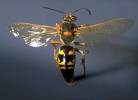
This gruesome wasp looks like you can hop on it's back for a ride to the corner store. The wasp's very intimidating size is for shock value, and it works, because this wasp is really a gentle giant. The females have a stinger but very rarely sting unless provoked and the males have no stinger.
They appear in Late July and August, They dig burrows in the ground kicking out the dirt and giving the appearance of a mound. They are helpful because they....well...kill cicada. The cicadas drive me bananas with their loud noisy chirp they make so the cicada killers can be my guest and do what they do best!
Treatment is often times not necessary unless the wasps are in an awkward area. Insect dust in the burrows would be the best best. IF you do it yourself be very careful because the wasps can sting if provoked, and trying to kill them with dust would be a provoking measure!
Sunday, August 06, 2006
CARPENTER ANTS
Carpenter Ants are large black ants that you notice most times climbing up and down tree trunks or scurrying on the pavement. There are times when these pests enter the home and they become public enemy number one fast. Don't be alarmed if you are noticing these ants here and there in the house because they will hunt for food and often times your house is like a McDonald's to them. Seeing a few ants or even a few ants daily doesn't mean you are infested. An inside perimeter spray will keep them at bay. So what are the signs of a real infestation in the house? You need to ask yourself these questions. Have a recently or in the past year had any leaks in the house? Then you need to ask your self if you've seen these ants in large numbers in the night time hours?
These ants are most active in the evening hours after 9PM and they are very attracted to damp or water damaged wood. It is easier for them to excavate a gallery for them to live in. Next thing you want to do is search for areas where there is saw dust or "frass" showing up. Maybe you notice every day "saw dust" is falling from a particular window sill area even after it's been vacuumed. This could be where the buggers are nesting. It is important to locate the nest to eliminate it. Another way to see where they are nesting is if you come across them foraging at night try to get them to take some sugar or another kind of crumb by placing it in there direct view. If they pick it up you will need to follow the ant and most likely he will disappear into the area he is nesting.
When the nest has been determined you will need to drill a few holes in the void they are nesting and "dust" the void with an insecticide dust. Baiting for these ants rarely work although recently over the past few years there has been success with a Maxforce carpenter ant gel and some advance carpenter ant granules that work. If the ants remain elusive then baiting might need to be your best way. There is a new formulation of chemicals that are working well with ants too. They are under the trade names Phantom and Termidor. The ants pass over the chemical and unknowingly track it back to the nest and infect the nest, killing it off.
Ways to help in keeping the ants away from your home would be to trim back any tree limbs that are touching your house or the roof, be sure that any cables or pipes that enter your house have no opening around them and if they do them caulk them, also cut back any bushes that are growing close to your home and make sure they are not touching the house. Call a pest control professional to "power spray" the perimeter of the home placing down a chemical barrier. This will also help.
These ants are most active in the evening hours after 9PM and they are very attracted to damp or water damaged wood. It is easier for them to excavate a gallery for them to live in. Next thing you want to do is search for areas where there is saw dust or "frass" showing up. Maybe you notice every day "saw dust" is falling from a particular window sill area even after it's been vacuumed. This could be where the buggers are nesting. It is important to locate the nest to eliminate it. Another way to see where they are nesting is if you come across them foraging at night try to get them to take some sugar or another kind of crumb by placing it in there direct view. If they pick it up you will need to follow the ant and most likely he will disappear into the area he is nesting.
When the nest has been determined you will need to drill a few holes in the void they are nesting and "dust" the void with an insecticide dust. Baiting for these ants rarely work although recently over the past few years there has been success with a Maxforce carpenter ant gel and some advance carpenter ant granules that work. If the ants remain elusive then baiting might need to be your best way. There is a new formulation of chemicals that are working well with ants too. They are under the trade names Phantom and Termidor. The ants pass over the chemical and unknowingly track it back to the nest and infect the nest, killing it off.
Ways to help in keeping the ants away from your home would be to trim back any tree limbs that are touching your house or the roof, be sure that any cables or pipes that enter your house have no opening around them and if they do them caulk them, also cut back any bushes that are growing close to your home and make sure they are not touching the house. Call a pest control professional to "power spray" the perimeter of the home placing down a chemical barrier. This will also help.
Friday, August 04, 2006
Moth fly
There's a title and a half for ya! These flies are problems in food handling establishments mostly, places like restaurants cafeterias and bars, but sometimes they find there way into the homes of people as well.
The most common fly is the drain fly. These flies come from filth. In food handling establishments they will emerge from the floor drains or garbage disposals where they breed in the gelatinous film that covers the walls of the pipes. They a feisty buggers with their eggs hatching in 2 days and they are sexually mature at birth. So you can see how they are such a successful insect. A similar fly compared to this one is the phorid fly who also breeds in the drains and garbage disposals and dumpster and trash cans. Any wet, damp area. Problems in restaurants are many. There are so many areas that have moisture, the mop closet, tiles pulled away from the wall get wet and stay wet, dishwashing area, floor drains, dumpster have decaying matter in them. Controlling these flies is difficult. Using a combination of fly light traps and manual cleaning and drying of the above areas works best. The floors drains often times need to be scrubbed out with a floor drain brush to break up all the gelatinous film that is on the drain walls, then regular treatment with a good bio drain gel will help to maintain your hard work. Fixing any cracked or broken tiles on the floor and walls is also good. Keeping the trash cans clean and DRY will help. It's an integrated approach for sure, but it will work.
In the home is you start seeing these buggers then the story is a bit more grim. It most likely means a broken soil pipe under the slab or in the basement. SO this will need to be checked with a camera that most plumbers have access to. They can also be coming up from your drains, pr their might be a leak under your bath tub or the seal of the toilet might be broken. These are all possibilities. An experienced exterminator will be able to help you in determining the source and the remedy is to fix the problem. Once dry then the flies will go away. Important to note is that if you have a broken soil pipe under a slab you will have to ask the contractor to remove all the wet soil and replace it with dry new soil, even with the pipe fixed the flies will breed for a long time in that moist dirt.
The most common fly is the drain fly. These flies come from filth. In food handling establishments they will emerge from the floor drains or garbage disposals where they breed in the gelatinous film that covers the walls of the pipes. They a feisty buggers with their eggs hatching in 2 days and they are sexually mature at birth. So you can see how they are such a successful insect. A similar fly compared to this one is the phorid fly who also breeds in the drains and garbage disposals and dumpster and trash cans. Any wet, damp area. Problems in restaurants are many. There are so many areas that have moisture, the mop closet, tiles pulled away from the wall get wet and stay wet, dishwashing area, floor drains, dumpster have decaying matter in them. Controlling these flies is difficult. Using a combination of fly light traps and manual cleaning and drying of the above areas works best. The floors drains often times need to be scrubbed out with a floor drain brush to break up all the gelatinous film that is on the drain walls, then regular treatment with a good bio drain gel will help to maintain your hard work. Fixing any cracked or broken tiles on the floor and walls is also good. Keeping the trash cans clean and DRY will help. It's an integrated approach for sure, but it will work.
In the home is you start seeing these buggers then the story is a bit more grim. It most likely means a broken soil pipe under the slab or in the basement. SO this will need to be checked with a camera that most plumbers have access to. They can also be coming up from your drains, pr their might be a leak under your bath tub or the seal of the toilet might be broken. These are all possibilities. An experienced exterminator will be able to help you in determining the source and the remedy is to fix the problem. Once dry then the flies will go away. Important to note is that if you have a broken soil pipe under a slab you will have to ask the contractor to remove all the wet soil and replace it with dry new soil, even with the pipe fixed the flies will breed for a long time in that moist dirt.
Thursday, August 03, 2006
Bed Bug Product
Bed bugs are back with a vengeance. Stories are spreading like wildfire across the country of people falling victim to these stealth bugs. It is ashame to think that going on vacation could wind up being on of the most anxious times in your life because of fear of getting bitten by bed bugs. These bugs are not prejudice in any way, they do not understand class lines, they can't see color, (except red). What they are is sneaky. They hitchhike home with you in luggage and boxes. It's a problem that I predict will get way worse before it becomes any better.
A product that is out there that could help in the battle is called Steri-Fab. It's a contact killer that is safe to use on beds, mattresses, furniture, etc. I would recommend using it in conjunction with your pest controllers plan of action. I firmly believe is using a professional for bed bug problems because they are very involved and tough to conquer.
A product that is out there that could help in the battle is called Steri-Fab. It's a contact killer that is safe to use on beds, mattresses, furniture, etc. I would recommend using it in conjunction with your pest controllers plan of action. I firmly believe is using a professional for bed bug problems because they are very involved and tough to conquer.
Monday, July 31, 2006
Blog Link exchange.
Post your blog on this directory and also read up on the lastest blog news! www.blogascope.com
Sunday, July 23, 2006
Mosquito Patrol!!
Summertime+Rainy weather=Mosquitos. So what's the word on the street? Scratching, itching, welts, bumps, annoying, bothersome. Looks like there a lot of words that describe these pesky insects. Public enemy number one might be a good description. Mosquito's go through a complete life cycle which basically means they have an egg, larva, pupa, and adult. These stages develop into the mosquito's we hate so much. Men in this insect society are the good guys because they don't bite, only the females need a blood meal to help develop her eggs. The most important thing to remember in controlling mosquito's is that you have to reduce the amount of standing water that is around a property. Pools, tires, toys, holes in trees, bird baths, cigarette butt cans, buckets, hollow bamboo, cluttered rain gutters, any place that can collect water and be undesturbed can be a massive breeding site for mosquito's, even the smallest of puddles. So after it rains it's a good idea to empty all this standing water to help reduce the areas the mosquito's can breed in. To help keep them away from you most people use the DEET or other repellent, they use the mosquito's traps that put out carbon dioxide which is a strong attractant and why they are attracted to humans, and some try the bug zappers. The zappers are cool and kill lots of bugs but not a good mosquito killer. It's a good thing to not want to have mosquito's as guest because they can spread lots of disease like malaria, yellow fever, west Nile virus, encephalitis, and dengue fever.
HIGH MOISTURE MEANS HIGH INSECT POPULATIONS!
With all the rain the eastern United Sates has been experiencing, it's safe to say that there is going to be a increase in the moisture loving bugs that invade the home. Some to watch out for are earwigs, sow bugs or pill bugs, millipedes, centipedes and public enemy number one, the mosquito. Other than the Mosquito, these creep crawlys will sneak into the home becoming a nuisance and becoming unwanted very quickly. Some things you can do would be to keep the grass trimmed around your property, prune back any branches that are touching your house and cut back any bushes that might be close to or touching the home. Also, you can hire a pest control professional to do an outside perimeter spray to help keep the population down and if you have mulch around the outside perimeter be sure to rake it back some so the exterminator can treat it thoroughly. These moisture loving bugs love mulch. Check to make sure that your rain gutters are clear and not overflowing down your walls to the perimeter of your home saturating the solid around your house. Make sure your rain spouts are draining properly taking the water away from the house. Take a walk around your house and make sure there is no standing water that mosquito's can breed in, all they need is a small amount of water, a tiny puddle to breed. Doing these things should help you to keep these buggers at bay!
Friday, July 21, 2006
Comments and Interaction
Just a note to any visitors. This site is an interactive site. If you have any comments or questions please post them in the comment section and I will respond as quickly as possible.
FLEAS
One job I'd hate the most when I was an exterminator was the flea job. Hopping all over you and making you paranoid and thinking to yourself if you brushed them all off before you got into your truck or were there any hidden in the tufts of your clothing. Yuck! When you have them they are definitely a bug that needs to be eliminated. I suggest always to hire an exterminator, a good pest control professional can advise you as to how to keep this problem from happening again and do the work while you are out and away from the action. If you decide to do it yourself there are plenty of products out there for you to do it. This is not a 5 minute spray and done job. To start with you will need to get the pet treated wither with a good dip or flea powder and then I strongly suggest using the product frontline to help prevent this problem from recurring. Then the pet will need to be kept out of the house for the day while you treat. To start with you will have to vacuum like you 've never vacuumed before. Pick up everything off the floor and out from under the beds and vacuum every inch of your house. Vacuum the sofas and chairs, vacuum especially thoroughly around areas your pet hangs out and vacuum the stairs . It is very important to vacuum as it is about 90 percent of the battle. Please remember to vacuum. Did I mention the importance of a thorough vacuuming? Point made. Next you will need to throw the vacuum bag outside of the house immediately. Now you will need to have bought a treatment spray for the house that has a growth regulator in it. Methoprene is the insect growth regulator of choice for fleas. The product will need to have a good adulticide as well. Some products that the pest control industry use are ultracide and precor. When you buy your product be sure it has this insect growth regulator in it or you will be throwing your money away. Some of you may be considering fogging or "bombing" your home. If you do be sure to have enough bombs to cover the areas needing treatment on the basement, first and second floors, also be sure that the fogger has an insect growth regulator like methoprene in it or you will be fogging your money away. VERY IMPORTANT! MAKE SURE ALL OPEN FLAMES ARE EXTINGUISHED BEFORE YOU START THE FOGGING AND PUT A SIGN ON YOUR FORNT DOOR THAT YOU ARE FOGGING. You'd be surprised how many stories I've heard about people blowing up their homes with insect foggers. I used to require my customers to shut off the gas at the main shut off valve before I would fog. READ THE LABEL ON ALL PRODUCTS. The label will give you important information and tips on the treatment. The sign is a good idea so that dear old aunt sally doesn't stop by while the family is out of the house because of the fog and uses her key to go in and winds up getting fogged herself! Just use common sense and caution. After the treatment you will still probably have fleas. Don't panic. They will die off over the next few days. You may also have a good week of no activity and then suddenly they are back. Don't panic. The eggs hatched and they will die. after about a week I'd give the house a good vacuuming again and throw out the bag and you should be flea free.
Tuesday, July 18, 2006
BEES, WASP, HORNETS!!!!!
It's mid summer and soon wasps and bees of all kinds will be going bonkers. Some things to consider when dealing with wasps and bees....they all sting and they all hurt. People have different reactions to stings and unfortunately might not know the reaction until they are actually stung. It is advised that if a nest is observed to steer clear and let the professionals handle it. Bees and wasps will nest just about anywhere, holes in a fence, holes in walls, under eaves, under fences, in the ground, on old pallets, inside abandoned cars, in your attic. Wherever they can squeeze into and start building a nest and be safe they will go. There are lot's of bees and wasps that people deal with everyday. Wasps, Yellow Jackets, Paper Wasps, bald Faced Hornets, Honey Bees, Bumble Bees, Cicada Killers, Digger Wasps, Mud Dauber Wasps, the list can go on and on. Some things to consider. If you come upon or near a honey bee nest and they start to "head bunt" you. Keep your cool and calmly but urgently move back away from them. Don't go Bazerk and start swatting because it could cause an alert response and you'll be in the morning paper the next day as the one who was attacked by bees. (Avoid at all costs) Honey Bees will sometimes warn you by "head bunting" to say to you, "Get back, this is our space" If they swarm and attack then run fast, run hard and get away, don't panic and stop and fall down in a ball because then you are doomed. If you notice bees or wasps flying into a hole or you stumble upon a hornet's nest then stop and watch their flight pattern, they will fly in one way and out the other. When you have pin pointed their flight pattern then my strong advice to you would be to NOT DISTURB THIS FLIGHT PATTERN. Even if you have to cross the street to avoid it. My next words of wisdom will be words to live by. If you find the hold Bees or Wasps are flying into especially if it is a hole on your outside wall of your house, DO NOT PLUG THAT HOLE UP!!!! I know people who will wait till it's dark and the activity seemed to stop and go out and caulk that hole thinking that the bees will be trapped and die. Let me tell you this, they will not die, in fact they will find their way into your house sooner than later. Cover their hole and they will find another way out and it's often by chewing a hole through your drywall on the inside and out into your living room. Another example is that they cover the hole at a fence, etc, in the morning when activity is low. Then by mid afternoon there are hundred of wasps or bees trying to get back into their hole and they are agitated and stinging anyone who passes by. NEVER COVER A BEE HOLE! Bees are tough customers...that's why people invented bee poles that allow exterminators to treat from far distances and that's why people invented bees suits and all that kind of stuff. Call your local exterminator.
Sunday, May 14, 2006
Bed Bug follow Up!
This past week I went to a seminar that covered the subject of Bed Bugs given my Austin Frisman, a genius in the pest control field. He basically covered where the industry was at and where this problem is going and it sounds like it will be an uphill battle. I went on Google and clicked on their news service and I get automatic updates for bed bug news stories. Almost every day there is a new article in my email box.
Sunday, May 07, 2006
Bed Bugs

Largely a pest to be reckoned with back in the days before world war two, it appears these secret agents of the bug world are making a comeback in a big way! Crafty at the game of hide and seek, these bugs hitch hike in luggage and make their way into your home where they hide in the smallest of cracks until they are hungry and go looking for a midnight snack. It looks like our jet set lifestyle and globalization are to blame for a comeback any Hollywood has been would kill for. Some points to ponder about these buggers are that they can live for a half a year without any food. Females need a blood meal before laying her eggs and when she does lay then look out! A female bed bug can lay 200 to 400 eggs during her lifetime. These eggs will hatch in 10 days or so depending on conditions. The newbies need to shed their skin or molt 5 times to make it to adulthood and in order to shed the skin they need, you guessed it, a blood meal.
So where do you look for these vampire of the night if you suspect you have them. First things first. If you think you may have bed bugs then try to catch one and have it identified. Inspecting for bedbugs if a daunting task. They hide in an seam,crack,crevice,tiny hole,tuft, they can find. You have to look: EVERYWHERE! Look behind curtains, take switch plates off the wall, if you have peeling wallpaper then peel it back and look, in drawers and nightstands, in hollow curtain rods and bed posts, boxprings, mattresses, under rugs, baseboards, molding of doors, pull back wall to wall carpets and look between the tack board and the wall,in alarm clocks, radios, clocks, behind pictures, cushions, pillows. Get the picture. Can you say, "nuclear bomb"? Well it's not that bad. It will be most likely you're going to have to call in the pros for this one. Be prepared to spend about 400 bucks a room. A good pest control expert will spend about 2 or more hours in a room and will need to treat and inspect all ajacent rooms upstairs and sideways. So what can you do? VACUUM! That's right, Vacuum like there's no tomorrow. Vacuum everywhere, in all the areas mentioned above. Then seal as much as you can. Cracks and crevices, caulk around window frames and baseboards, etc. Don't slop the joint up with caulk, but do what you can and consult your pest control expert as to what to seal. When you are pretty sure your bed is safe they make it an island adventure. Tuck in all your sheets and covers, move the bed away from the wall and people have been know to even put the legs of the bed in bowels of soapy water to prevent the buggers from crawling up the legs back onto the bed.
If you decide to do it yourself, then be sure to be careful what kind of chemicals you use and read the label of the product to make sure it can be used. Some products like Sterifab can be used in sensitive areas. Just be careful and thorough. I still recommend a pro. One other thing, don't give up. They are bugs and we are humans. We will prevail!
Check out these two interesting articles I found on Google News about the buggers.
Terri Gruca's article in the WCCO http://wcco.com/consumer/local_story_125103328html
And Jodi Dorsch's article in the PCT online http://www.pctonline.com/news/news.asp?ID=4224
Subscribe to:
Posts (Atom)
